
Safety Goes Beyond the Mat: What Martial Arts Can Teach Kids About Being Safe
Featured Posts
Safety Goes Beyond the Mat: What Martial Arts Can Teach Kids About Being Safe
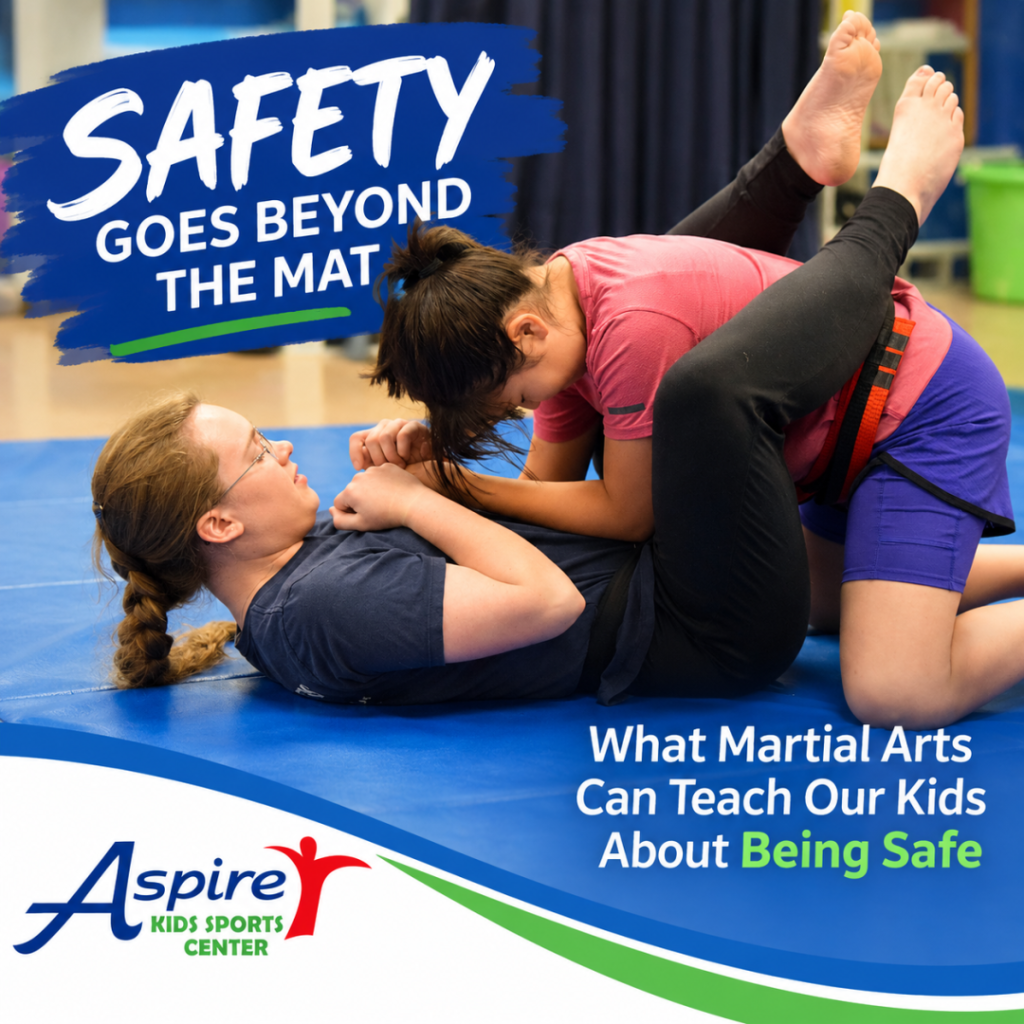
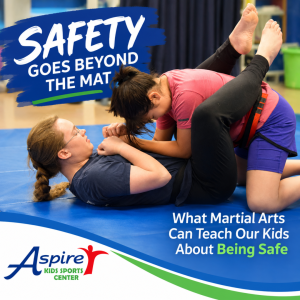
When we talk about safety at Aspire, we often think about things like proper spotting, safe landings, equipment checks, and swimming skills. These are important parts of keeping kids safe—but safety is about much more than preventing physical injuries.
Safety is also about awareness, confidence, boundaries, decision-making, and knowing what to do when something doesn’t feel right.
That is one of the many reasons martial arts for kids can be such a valuable activity.
At Aspire Kids Sports Center, we believe that sports should help children become happy, healthy, confident, and capable. Martial arts gives kids an opportunity to develop physical skills while learning important lessons they can carry with them far beyond the gym.
1. Martial Arts Teaches Kids to Be Aware of Their Surroundings
One of the first steps toward being safe is simply paying attention.
Martial arts encourages children to be aware of where they are, who is around them, and what is happening in their environment. They learn to listen to instructions, watch carefully, and stay focused on the task in front of them.
That awareness can be useful everywhere—from walking through a parking lot to being at school, at a park, or in a crowded public place.
Being aware doesn’t mean being afraid. It means being prepared.
2. Kids Learn That Their Voice Matters
Safety isn’t always about knowing a physical skill. Sometimes, the safest thing a child can do is speak up.
Martial arts can reinforce the importance of using a strong, confident voice. Kids learn to communicate clearly with instructors and partners, ask questions, and let someone know when they are uncomfortable or need help.
These are skills that can help children understand that it is okay to say:
- “Stop.”
- “I don’t like that.”
- “Please give me some space.”
- “I need help.”
- “That’s not okay.”
Learning to communicate boundaries is an important part of growing confidence.
3. Martial Arts Builds Confidence—Not Aggression
A common misconception is that teaching kids martial arts encourages fighting.
In reality, quality martial arts instruction focuses on discipline, control, respect, and responsibility.
Children learn that having physical skills doesn’t mean they should use them to solve every problem. Instead, they learn how to stay calm, make good choices, and avoid unnecessary conflict.
The goal isn’t to teach kids to look for a fight.
The goal is to help them feel confident enough to make smart choices when faced with a difficult situation.
4. Kids Learn Self-Control
Martial arts requires children to control their bodies and their emotions.
They practice movements repeatedly. They learn to wait their turn. They listen to instructions. They work with partners. They learn that mistakes are part of learning.
All of these experiences build self-control.
And self-control is a safety skill.
A child who can pause, think, and make a decision instead of immediately reacting is better equipped to handle challenging situations.
5. Respect Is Part of Being Safe
Martial arts teaches children that training partners are people to be respected—not opponents to be defeated at any cost.
Kids learn to respect personal space, follow rules, listen to instructors, and treat others appropriately.
They also learn that their own boundaries deserve respect, too.
This creates an environment where children can begin to understand an important message:
Safety works both ways. We respect other people, and we expect others to respect us.
6. Kids Practice Staying Calm Under Pressure
New skills can be challenging. Sometimes a child gets nervous, makes a mistake, or doesn’t know what to do next.
Martial arts gives kids opportunities to practice working through those moments in a controlled environment.
Instead of giving up when something feels difficult, they learn to breathe, listen, try again, and ask for help.
That ability to stay calm and think clearly can be useful in many situations—not just martial arts.
7. Knowing When to Ask for Help Is a Strength
One of the most important safety lessons a child can learn is that they don’t have to handle everything alone.
Martial arts provides regular opportunities for children to work with trusted instructors and adults. They learn to communicate when they are confused, uncomfortable, hurt, or need assistance.
We want kids to understand that asking for help isn’t a weakness.
It is a smart and responsible choice.
Safety Is About More Than What Kids Can Do
At Aspire, we want our kids to develop skills that extend beyond their time in the gym.
Gymnastics can teach body awareness and safe movement. Swimming can teach children life-saving water skills. And martial arts can help children develop awareness, confidence, self-control, respect, and the ability to make thoughtful decisions.
These are all pieces of a bigger picture.
Because being safe isn’t just about knowing what to do physically. It’s about knowing how to think, communicate, recognize boundaries, and make good choices.
That’s why safety goes beyond the mat.
Building Confidence. Building Awareness. Building Happy, Healthy Kids.
Aspire’s martial arts program gives kids a structured, supportive environment where they can develop physical skills while learning valuable life skills along the way.
If you’re looking for an activity that can help your child build confidence, discipline, coordination, respect, and self-awareness, martial arts may be a great place to start.
Explore martial arts at Aspire Kids Sports Center and discover how your child can grow stronger—inside and out.